

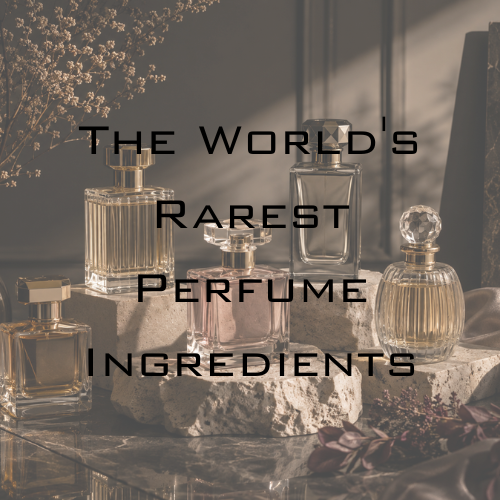
Some perfume ingredients are expensive because they're fashionable. Others command extraordinary prices because nature makes them incredibly difficult—or even impossible—to produce on demand.
A fragrant resin that forms only when a tree is infected. Flower roots that must mature for years before revealing their scent. These aren't marketing stories—they're the remarkable realities behind some of perfumery's rarest ingredients.
While modern fragrance chemistry has made luxury scents more accessible, these extraordinary natural materials continue to represent the pinnacle of craftsmanship, patience, and artistry.
Oud: The Wood Worth More Than Gold
If you've explored luxury perfumery, you've almost certainly encountered oud. Often called liquid gold, it's one of the most sought-after ingredients in modern fragrance.
What makes it remarkable is that it doesn't come from a healthy tree.
Oud forms only when certain Aquilaria trees become infected by a naturally occurring fungus. As the tree protects itself, it produces a dark aromatic resin that slowly transforms the wood over many years.
Because this process is unpredictable—and because many agarwood-producing species are protected—genuine oud remains exceptionally rare.
Today, most perfumes use expertly crafted oud accords rather than large amounts of natural oud, helping preserve this precious resource while making its unmistakable character more accessible.
🌿 Did You Know?
Not every Aquilaria tree produces oud. In the wild, only a small percentage naturally develop the fragrant resin that becomes agarwood, making genuine oud one of the rarest raw materials in perfumery.
Learn more: The Perfume Society – Agarwood
Orris Butter: Five Years in the Making
Most floral perfume ingredients come from petals. Orris butter is different.
It comes from the underground rhizomes of the iris plant, which are left to dry and mature for up to five years before they're distilled. That long wait transforms an almost scentless root into one of perfumery's most luxurious ingredients, prized for its soft, powdery, violet-like character.
Even a small amount of orris can add elegance and depth, making it a favorite in many classic and modern fragrances.
🔬 Behind the Science
Orris gets its distinctive scent from irones—aromatic compounds that develop naturally during the aging process. Without years of drying, the rhizomes have very little fragrance.
Further Reading: Classic Perfumery Ingredients — Orris Root (Fragrantica)
Ambergris: The Ocean's Most Mysterious Treasure
Few perfume ingredients have inspired as much curiosity as ambergris.
Produced by sperm whales and transformed by years of exposure to the sea, ambergris was once one of the most valuable materials in perfumery. Rather than adding a strong scent of its own, it was prized for giving fragrances remarkable depth and longevity.
Today, natural ambergris is rarely used, but its legacy lives on through modern fragrance ingredients that recreate its smooth, warm character.
🌊 Fragrance History
For centuries, ambergris was known as "floating gold" and was traded alongside luxury goods because of its rarity and value in perfumery.
Further Reading: The Mystery of Ambergris (Smithsonian Ocean)
Why These Ingredients Still Matter
Luxury perfumery has always balanced artistry with innovation. While modern fragrance chemistry has made scents more consistent and sustainable, rare natural ingredients continue to inspire perfumers around the world.
Their stories remind us that perfume isn't just about smelling beautiful—it's about history, craftsmanship, culture, and the remarkable journey from nature to bottle.
Whether you're drawn to the smoky richness of oud, the velvety elegance of orris, or the legendary allure of ambergris, understanding these materials offers a deeper appreciation for every fragrance you wear.
✨ Discover Rare Notes at Scent in the City
The world's rarest perfume ingredients may not appear in every bottle, but their influence can be found throughout modern perfumery.
Whether you're drawn to the smoky richness of oud, the powdery elegance of iris, or the warm sophistication inspired by ambergris, explore Scent in the City's curated collection of niche and luxury fragrances to discover scents shaped by these timeless traditions.


